
NEWS > Technical Knowledge Hub > Modified Sine Wave vs Pure Sine Wave Inverters
Modified Sine Wave vs Pure Sine Wave Inverters
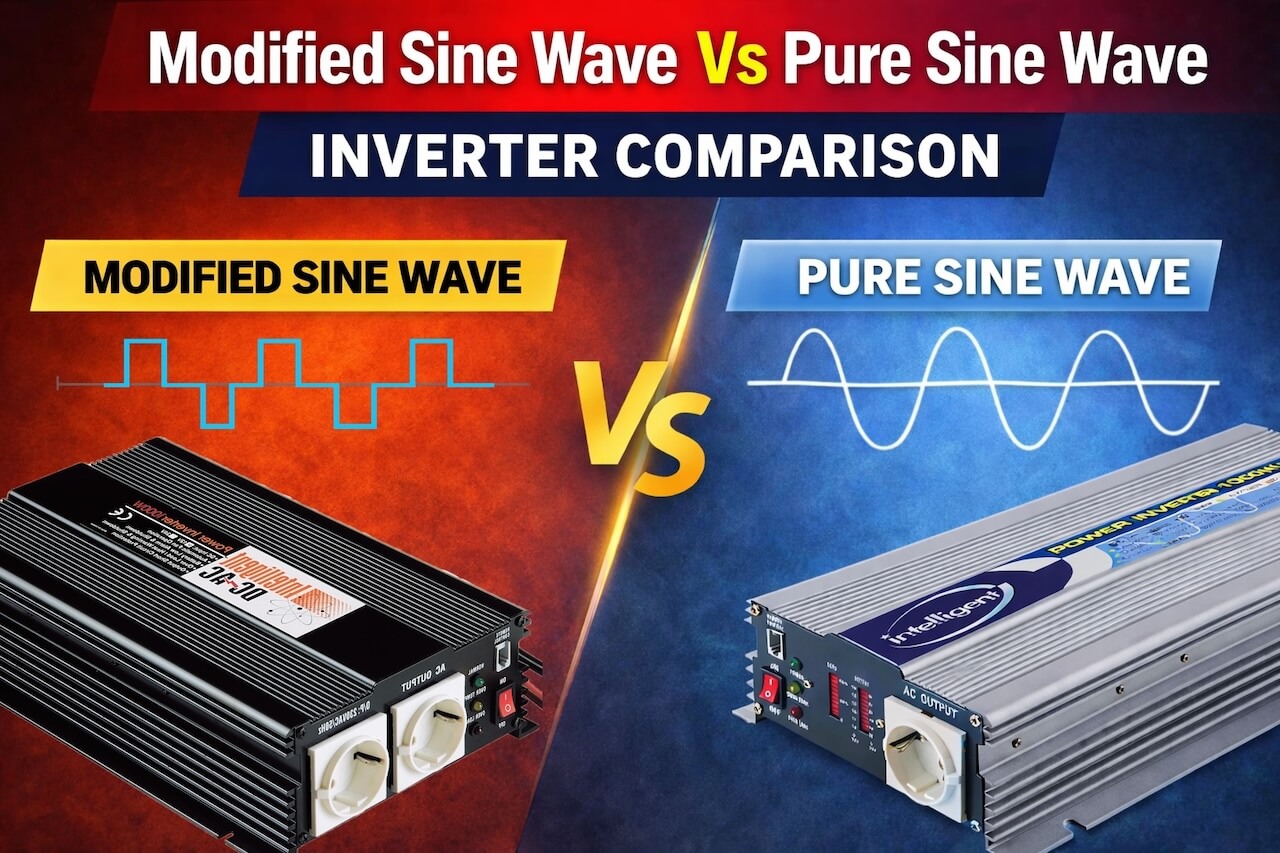
Modified Sine Wave vs Pure Sine Wave Inverters – Differences, Advantages, and Applications
Power inverters convert DC battery power into AC electricity used by household appliances and electronic devices. Two main types of inverters dominate the market:
- Modified Sine Wave Inverters
- Pure Sine Wave Inverters
Understanding the differences between these inverter types is essential when selecting the right power solution for applications such as RV systems, off-grid solar installations, mobile work vehicles, and backup power systems.
As a professional Taiwan inverter manufacturer, LinkChamp produces both modified sine wave and pure sine wave inverter solutions for a wide range of industries.
Understanding AC Waveforms
Utility power delivered by electrical grids uses a smooth sinusoidal waveform. Many electrical devices are designed to operate with this waveform.
Inverters reproduce AC electricity electronically, but the waveform quality varies depending on the inverter design.
| Inverter Type | Waveform Shape |
|---|---|
| Pure Sine Wave | Smooth sinusoidal waveform |
| Modified Sine Wave | Stepped square waveform |
Pure sine wave inverters replicate the waveform produced by the electrical grid, while modified sine wave inverters produce a simplified stepped waveform.
What is a Modified Sine Wave Inverter?
A modified sine wave inverter generates AC output using a stepped waveform that approximates a sine wave. This design is simpler and more cost-effective compared to pure sine wave technology.
Modified sine wave inverters are widely used for many general-purpose electrical loads.
Typical applications include:
- lighting systems
- power tools
- heating elements
- simple motor loads
- battery chargers
LinkChamp offers modified sine wave inverter solutions in the SP Series (Classic), HP Series (Compact), and ES Series (Energy-Saving), designed for reliable and economical power conversion.
Advantages of Modified Sine Wave Inverters
| Advantage | Explanation |
|---|---|
| Lower cost | simpler internal design reduces manufacturing cost |
| High efficiency | fewer conversion components |
| Suitable for many basic appliances | lighting, tools, and simple electronics |
| Reliable design | proven technology used for decades |
Limitations of Modified Sine Wave Inverters
Despite their advantages, modified sine wave inverters may not work optimally with certain devices.
Common limitations include:
| Limitation | Impact |
|---|---|
| Audible noise | motors and transformers may produce buzzing sounds |
| Reduced efficiency for some appliances | certain devices draw more current |
| Not suitable for sensitive electronics | medical devices and precision equipment may malfunction |
| Interference | may introduce electrical noise in audio systems |
Because of these limitations, modified sine wave inverters are best suited for basic electrical loads.
What is a Pure Sine Wave Inverter?
A pure sine wave inverter produces an AC waveform that closely matches the electricity supplied by utility power grids.
This high-quality waveform allows the inverter to operate nearly all types of electrical equipment safely and efficiently.
Typical applications include:
- laptops and computers
- televisions
- medical devices
- refrigerators
- microwave ovens
- induction motors
- audio and communication equipment
LinkChamp's pure sine wave inverter SN Series is designed to provide stable power for sensitive electronics and professional applications.
Modified Sine Wave vs Pure Sine Wave – Key Differences
The following table highlights the main differences between the two technologies.
| Feature | Modified Sine Wave | Pure Sine Wave |
|---|---|---|
| Waveform quality | stepped waveform | smooth sinusoidal waveform |
| Appliance compatibility | limited | nearly universal |
| Cost | lower | higher |
| Electrical noise | possible | minimal |
| Motor efficiency | lower | higher |
| Suitable for sensitive electronics | not recommended | recommended |
While modified sine wave inverters are adequate for many applications, pure sine wave inverters provide significantly better compatibility.
Appliance Compatibility Comparison
Different types of electrical equipment respond differently to inverter waveforms.
| Appliance Type | Modified Sine Wave | Pure Sine Wave |
|---|---|---|
| LED lighting | ✔ | ✔ |
| power tools | ✔ | ✔ |
| laptop chargers | ✔ | ✔ |
| televisions | sometimes | ✔ |
| refrigerators | sometimes | ✔ |
| microwave ovens | limited | ✔ |
| medical equipment | not recommended | ✔ |
| audio equipment | noise possible | ✔ |
Devices that rely on precise electronic control or high-quality power typically require pure sine wave power.
Efficiency and Power Consumption
Some appliances consume more power when operating on modified sine wave inverters.
Examples include:
- induction motors
- compressors
- microwave ovens
- battery chargers
These devices may run hotter and less efficiently when powered by modified sine wave output.
Pure sine wave inverters allow these appliances to operate with higher efficiency and lower heat generation.
When to Choose a Modified Sine Wave Inverter
Modified sine wave inverters are a good choice when:
- the electrical loads are simple
- cost is an important consideration
- sensitive electronics are not present
Typical applications include:
- work trucks
- construction equipment
- lighting systems
- mobile service vehicles
LinkChamp's modified sine wave inverter SP Series provides a reliable and economical solution for these applications.
When to Choose a Pure Sine Wave Inverter
Pure sine wave inverters are recommended when powering:
- computers and networking equipment
- home appliances
- refrigerators and compressors
- medical equipment
- audio systems
- modern electronic devices
Pure sine wave inverters are also ideal for:
- RV electrical systems
- residential backup power
- solar power systems
For these applications, LinkChamp recommends the pure sine wave inverter SN Series, designed to deliver stable AC output and excellent appliance compatibility.
Cost vs Performance Considerations
One of the main differences between inverter types is cost.
| Inverter Type | Typical Cost | Performance |
|---|---|---|
| Modified Sine Wave | lower | suitable for basic loads |
| Pure Sine Wave | higher | compatible with nearly all devices |
While modified sine wave inverters are less expensive, many users choose pure sine wave models for long-term reliability and broader device compatibility.
Conclusion
Both modified sine wave and pure sine wave inverters play important roles in modern power systems.
Modified sine wave inverters offer a cost-effective solution for basic electrical loads, while pure sine wave inverters provide higher power quality and better compatibility with sensitive electronics.
LinkChamp manufactures both inverter technologies:
- economical modified sine wave inverters
- high-performance pure sine wave inverters
Choosing the right inverter depends on the application, electrical load requirements, and system budget.
Learn more about LinkChamp power solutions:
Pure Sine Wave Inverters
Modified Sine Wave Inverters
About LinkChamp