
NEWS > Technical Knowledge Hub > Common Applications for Power Inverters
Common Applications for Power Inverters
Common Applications for Power Inverters
Electric power systems generally use two types of electricity: direct current (DC) and alternating current (AC). Batteries, solar panels, and many energy storage systems produce DC power, while most household appliances and industrial equipment operate on AC. A power inverter converts stored DC energy into usable AC electricity.
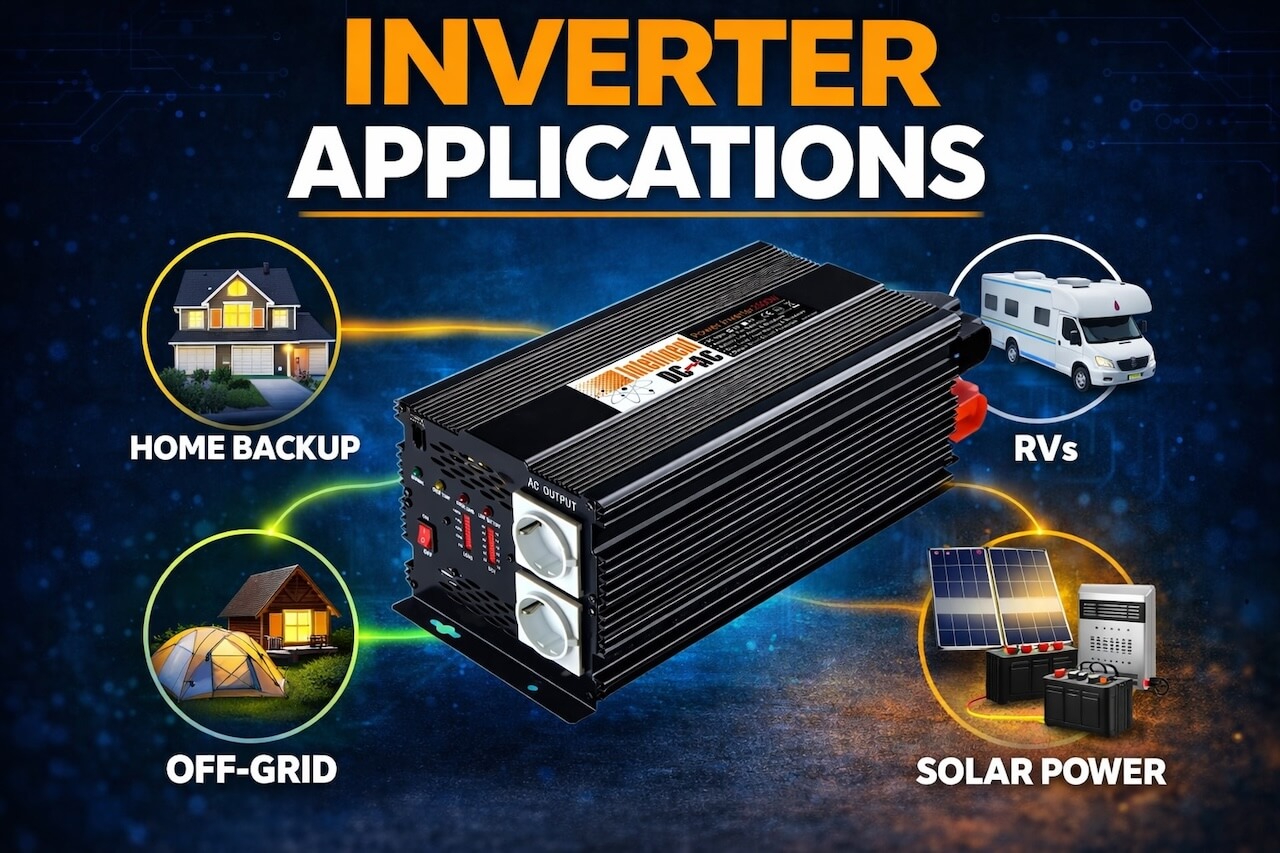
Because of this function, power inverters are used across many industries and environments, including mobile systems, industrial vehicles, residential energy systems, renewable energy installations, and telecommunications infrastructure.
As a long-time Taiwan Inverter Manufacturer, LinkChamp develops power conversion products used in these applications worldwide.
Recreational Vehicles (RV) and Mobile Living
Power inverters are widely used in recreational vehicles (RVs), camper vans, and mobile homes. These vehicles typically rely on battery banks storing DC power from alternators, solar panels, or shore charging systems.
A DC-AC inverter allows travelers to operate common AC appliances off-grid, including:
- microwave ovens
- induction cooktops
- laptop computers
- televisions
- coffee machines
- air conditioning units
In these systems, pure sine wave inverters are preferred because they provide stable AC output compatible with sensitive electronics.
Typical inverter power ranges in RV systems include:
| Application | Typical Power |
|---|---|
| Laptop / small electronics | 300W – 600W |
| Kitchen appliances | 1000W – 2000W |
| Air conditioners / full RV systems | 3000W – 5000W |
High-capacity models such as LinkChamp's SN Series are commonly used in mobile power systems.
Marine and Boat Power Systems
Marine vessels typically operate on 12V or 24V DC battery systems, but many onboard devices require AC power.
Power inverters allow boats to operate equipment such as:
- navigation systems
- refrigerators
- lighting systems
- entertainment electronics
- kitchen appliances
Marine installations require inverters with strong reliability, vibration resistance, and efficient cooling. Pure sine wave output is particularly important for sensitive navigation electronics.
Industrial and Fleet Vehicles
Many commercial service vehicles require AC power in locations without utility electricity. Examples include:
- utility repair trucks
- telecommunications service vehicles
- mobile mechanics
- construction service vans
These vehicles power equipment such as drills, grinders, saws, battery chargers, and diagnostic tools.
High-capacity inverters allow technicians to bring workshop-level power directly to field locations. These systems must withstand vibration, temperature changes, and heavy intermittent loads.
Construction and Field Work Sites
Construction and engineering teams often need temporary power before permanent electrical infrastructure is installed.
Portable inverter systems powered by battery banks can operate:
- portable lighting
- testing instruments
- communication systems
- laptops and diagnostic tools
Compared with generators, inverter systems offer silent operation, no fuel requirements, lower maintenance, and cleaner electrical output.
Residential Backup Power Systems
Extreme weather, aging grid infrastructure, and natural disasters have increased demand for home backup power systems.
Inverter-based backup systems are commonly paired with battery storage systems. LinkChamp's Inverter Charger integrates DC-AC conversion, battery charging, and AC bypass functionality for residential backup applications.
When the grid fails, the inverter automatically supplies power to critical household loads such as:
- refrigerators
- lighting circuits
- internet routers
- medical equipment
- security systems
These systems can also operate alongside solar installations to create hybrid home energy solutions.
Renewable Energy and Solar Power Systems
Solar panels generate DC electricity, which must be converted into AC to power appliances or connect to the grid.
In solar installations, inverters:
- convert solar DC power to AC electricity
- manage energy flow between batteries and loads
- maintain stable voltage and frequency
Typical off-grid battery systems operate at:
- 12V
- 24V
- 48V
Higher voltages improve efficiency and reduce current losses in larger systems.
Telecommunications Infrastructure
Telecommunications networks require continuous and reliable power. Cellular towers, data nodes, and remote relay stations often rely on battery backup systems combined with inverters.
During grid outages, these inverter systems maintain operation of communication equipment, ensuring network stability and emergency connectivity.
Choosing the Right Inverter
Selecting the correct inverter depends on several factors:
Output Power
The inverter must support both continuous and surge loads.
Input Voltage
Common system voltages include 12V, 24V, and 48V.
Output Waveform
Pure sine wave inverters provide clean AC power suitable for sensitive electronics.
Efficiency
Modern inverters typically achieve efficiencies between 85% and 95% depending on load conditions.
Conclusion
Power inverters play a vital role in modern electrical systems. From RVs and marine vessels to industrial vehicles, renewable energy systems, and telecommunications infrastructure, inverter technology converts stored DC energy into usable AC power.
As a professional Taiwan Inverter Manufacturer, LinkChamp continues to develop reliable DC-AC power conversion solutions for customers worldwide.
Explore LinkChamp inverter solutions:
https://www.dc-ac.com/product
Learn more about our company:
https://www.dc-ac.com/company